
1. Phiên bản Tiếng Việt
Hàng ngàn bài giảng kỹ năng sống trên mạng đang bị học sinh bỏ qua chỉ sau vài phút truy cập. Lý do? Nội dung khô cứng, giáo điều và quan trọng nhất là thiếu khả năng tương tác cá nhân hóa. Nếu bạn chỉ đưa một video bài giảng về “kỹ năng giao tiếp” lên website, bạn không phải đang dạy học, bạn chỉ đang lưu trữ dữ liệu. Sai lầm lớn nhất của các nhà phát triển giáo dục là tin rằng chỉ cần số hóa giáo trình là đủ. Khi học sinh đối mặt với những tình huống thực tế phức tạp – bị bắt nạt, áp lực thi cử, hay mâu thuẫn gia đình – một video bài giảng không thể đưa ra lời khuyên tức thời. Đây là lúc website AI môn Kỹ năng sống phải thay đổi cuộc chơi hoặc chấp nhận thất bại.
Bản chất và cơ chế vận hành của AI trong giảng dạy kỹ năng
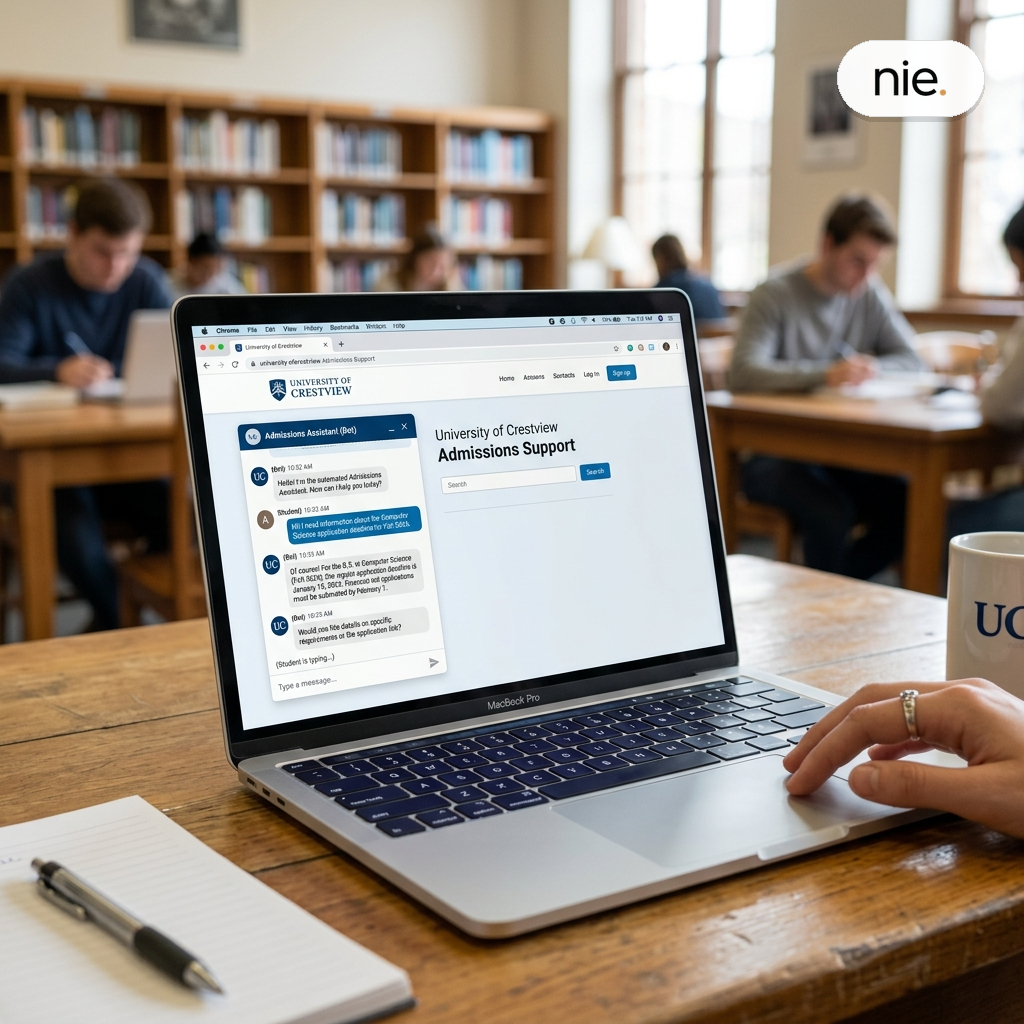
Việc tích hợp trí tuệ nhân tạo không nằm ở việc tạo ra các chatbot trả lời tự động bằng kịch bản có sẵn. Đó là công nghệ lạc hậu. Một website tích hợp AI hiệu quả phải vận hành dựa trên các mô hình ngôn ngữ lớn (LLM) được tinh chỉnh (fine-tuned) với kho dữ liệu tâm lý học và giáo dục hành vi. Cơ chế này cho phép website phân tích ngữ cảnh từ câu hỏi của học sinh, xác định trạng thái cảm xúc và đưa ra phản hồi mang tính gợi mở thay vì áp đặt giải pháp. Ví dụ, khi học sinh hỏi về cách ứng phó với sự thất bại, AI không đưa ra danh sách các bước hành động, mà nó sẽ đặt lại những câu hỏi để học sinh tự nhận thức được giá trị bản thân. Sự khác biệt cốt lõi nằm ở khả năng tùy biến: máy tính hiểu được trình độ tư duy và ngôn ngữ của từng em để điều chỉnh cách truyền tải. Đừng mơ tưởng đến việc AI thay thế giáo viên; nó chỉ đang đóng vai trò là một người hướng dẫn ẩn danh, sẵn sàng lắng nghe mọi nỗi sợ hãi mà học sinh thường không dám chia sẻ với phụ huynh.
Giá trị thực tế: Phân tích so sánh
Hiệu quả của việc ứng dụng công nghệ không nằm ở sự hào nhoáng, mà ở khả năng giải quyết các nút thắt trong hành trình học tập. Dưới đây là bảng so sánh khả năng đáp ứng giữa website truyền thống và website tích hợp AI:
| Tiêu chí | Website truyền thống | Website tích hợp AI |
|---|---|---|
| Phản hồi học tập | Tĩnh, theo giáo trình cứng nhắc | Động, cá nhân hóa theo tình huống |
| Đánh giá tâm lý | Không thể thực hiện | Phát hiện sớm dấu hiệu bất ổn |
| Chi phí vận hành | Thấp, nhưng hiệu quả thấp | Cao hơn, nhưng tỷ lệ gắn kết cao |
Quy trình AI hỗ trợ học sinh
Rào cản và thực tế triển khai
Đừng ảo tưởng về tính hoàn hảo. Rủi ro lớn nhất khi tích hợp AI vào môn Kỹ năng sống là “ảo giác AI” (hallucinations). Nếu chatbot đưa ra lời khuyên sai lệch về sức khỏe tâm thần, hậu quả sẽ cực kỳ nghiêm trọng. Giải pháp là gì? Không bao giờ để AI tự ý đưa ra kết luận cuối cùng trong các tình huống nhạy cảm. Hệ thống phải được thiết kế để phân loại các yêu cầu hỗ trợ. Với các câu hỏi đơn giản về kỹ năng mềm, AI có thể xử lý hoàn toàn. Nhưng với những yêu cầu mang tính khủng hoảng cảm xúc, AI bắt buộc phải đóng vai trò sàng lọc và chuyển tiếp tới chuyên gia con người ngay lập tức. Thêm vào đó, vấn đề bảo mật dữ liệu học sinh là một “hố đen”. Nếu dữ liệu không được mã hóa đầu cuối và tuân thủ các tiêu chuẩn nghiêm ngặt về quyền riêng tư, dự án của bạn sẽ trở thành mục tiêu của tội phạm mạng. Rất nguy hiểm.
Giải đáp thắc mắc thường gặp
Dữ liệu học sinh có an toàn khi sử dụng AI không?
Chỉ an toàn nếu bạn chọn đúng hạ tầng. Tuyệt đối không dùng các API công cộng mà không có lớp lọc dữ liệu cá nhân (PII – Personally Identifiable Information). Việc tự xây dựng hệ thống lưu trữ nội bộ hoặc sử dụng các server có cam kết bảo mật là bắt buộc.
Chi phí tích hợp AI có thực sự đắt đỏ?
Phụ thuộc vào mô hình bạn chọn. Bạn có thể bắt đầu với việc sử dụng các mô hình nguồn mở như Llama 3 chạy trên server riêng để kiểm soát chi phí lâu dài thay vì phụ thuộc vào phí gọi API theo lượt từ các nhà cung cấp như OpenAI.
AI có làm học sinh lười tư duy không?
Có, nếu bạn cài đặt AI trả lời thẳng vào kết quả. Nhưng nếu bạn cài đặt AI chỉ đóng vai trò “Socrates” – người đặt câu hỏi ngược lại – thì khả năng tư duy phản biện của học sinh sẽ tăng lên đáng kể.
Xây dựng một website giảng dạy kỹ năng sống không phải là cuộc chơi của những công cụ có sẵn. Đó là bài toán về sự thấu hiểu người học và tính chuẩn xác của dữ liệu. Tại NIE.vn, chúng tôi không đơn thuần cung cấp mã nguồn hay giao diện. Hộ kinh doanh Nguyễn Thông hiểu rằng, mỗi đơn vị giáo dục có những đặc thù riêng, cần những giải pháp công nghệ như hệ thống E-learning bản quyền hoặc thiết kế website chuẩn SEO chuyên biệt để chuyển tải giá trị nội dung một cách minh bạch và an toàn nhất. Sự tin tưởng của khách hàng chính là nền tảng bền vững hơn mọi thuật toán công nghệ nào.
2. English Version
Thousands of life-skills lectures online are being abandoned by students after just a few minutes of browsing. Why? The content is often dry, didactic, and—most importantly—lacks personalized interaction. If you simply upload a “communication skills” video lecture to a website, you aren’t teaching; you’re merely hosting data. The biggest blunder for educational developers is the naive belief that digitizing a curriculum is enough. When students face complex real-world situations—bullying, academic pressure, or family conflict—a pre-recorded video cannot offer immediate, empathetic guidance. This is exactly where AI-driven life-skills platforms must change the game, or face inevitable obsolescence.
The Essence and Mechanics of AI in Skill-Based Education
Integrating Artificial Intelligence is not about deploying basic chatbots that rattle off scripted answers. That is obsolete technology. An effective AI-powered educational website must operate on Large Language Models (LLMs) fine-tuned with curated datasets in psychology and behavioral education. This architecture allows the platform to analyze context from a student’s inquiry, detect emotional states, and provide exploratory feedback rather than imposing top-down solutions. For instance, if a student asks how to cope with failure, the AI won’t just output a checklist; it will pivot by asking probing questions that encourage the student to reflect on their own self-worth. The core differentiator lies in adaptability: the system understands the student’s cognitive maturity and vocabulary, tailoring the delivery accordingly. Don’t fall for the delusion that AI replaces teachers; instead, it serves as an anonymous mentor—a safe space where students can voice fears they would never dare share with their parents.
Real-World Value: A Comparative Analysis
The true efficacy of technology lies not in its bells and whistles, but in its ability to resolve bottlenecks in the learning journey. The following table compares the functional capabilities of traditional websites versus AI-integrated educational platforms:
| Criteria | Traditional Website | AI-Integrated Website |
|---|---|---|
| Learning Feedback | Static, rigid, curriculum-based | Dynamic, situation-aware personalization |
| Psychological Assessment | Incapable | Early detection of emotional distress |
| Operational Cost | Low, but yield is minimal | Higher initial investment, superior engagement |
The AI-Assisted Student Support Workflow
Implementation Realities and Barriers
Let’s not romanticize the technology; it isn’t flawless. The most significant risk when integrating AI into life-skills education is the phenomenon of “AI hallucinations.” If a chatbot provides medically or psychologically inaccurate advice, the consequences could be dire. So, what is the safeguard? Never allow AI to reach a final, binding conclusion in sensitive situations. The system must be engineered to triage requests. For general queries regarding soft skills, the AI can operate autonomously. However, for crises involving severe emotional distress, the system must act as a screener that automatically escalates the issue to a human professional. Furthermore, data security is a looming black hole. If student data is not end-to-end encrypted and managed in compliance with strict privacy standards, your platform will become a prime target for cybercriminals. The stakes are simply too high to compromise on security.
Frequently Asked Questions
Is student data safe when using AI?
It is secure only if you choose the right infrastructure. Never rely on public APIs without a robust layer for filtering Personally Identifiable Information (PII). Building an internal storage system or utilizing dedicated, secure servers is non-negotiable.
Is AI integration prohibitively expensive?
It depends on the model you select. You can start by leveraging open-source models like Llama 3 hosted on private servers to maintain long-term cost control, rather than relying on per-request API fees from commercial providers like OpenAI.
Will AI make students less inclined to think for themselves?
It certainly will if you configure the AI to provide direct answers. However, if you prompt the AI to adopt a “Socratic” persona—consistently asking counter-questions—it will actually become a powerful catalyst for enhancing a student’s critical thinking skills.
Building a life-skills education platform isn’t just about assembling off-the-shelf tools; it is a complex puzzle of understanding the learner and ensuring data integrity. At NIE.vn, we don’t just provide code or design layouts. Nguyen Thong Business understands that every educational institution has unique requirements, necessitating bespoke technological solutions—whether that involves licensed E-learning systems or specialized SEO-optimized websites to deliver content transparently and securely. Ultimately, client trust remains a more sustainable foundation than any technological algorithm.
3. 中文版
网络上成千上万的生存技能课程,往往在学生点开后的几分钟内就被关闭。原因何在?内容枯燥、教条化,最关键的是缺乏个性化的交互能力。如果你只是将一段关于“沟通技巧”的视频传到网站上,这不叫教学,这仅仅是在进行数据存储。教育开发者最大的误区,就是认为只需将教材数字化就万事大吉了。当学生面对复杂现实——如校园霸凌、考试压力或家庭矛盾时,一段冷冰冰的教学视频根本无法提供即时的心理疏导。这正是“AI生存技能教育网站”要么转型重构,要么被时代淘汰的转折点。
AI辅助技能教学的本质与运作逻辑
人工智能的融合,绝不是通过脚本化聊天机器人进行简单的自动回复。那是过时的技术。一个高效的AI驱动型网站,必须基于经过心理学和行为科学数据微调(Fine-tuning)的大语言模型(LLM)。这一机制允许网站分析学生的提问语境,精准捕捉情感状态,并给出启发式反馈,而非强加解决方案。例如,当学生询问如何应对失败时,AI不会列出一堆行动步骤,而是通过反向提问,引导学生自我认知并发现自身价值。核心差异在于定制化能力:计算机能够理解每个孩子的思维深度与语言习惯,从而调整表达方式。请不要幻想AI能完全取代教师;它只是充当了一名隐秘的导师,随时准备倾听那些学生通常不敢向父母吐露的恐惧。
价值体现:对比分析
技术的有效性不在于视觉的华丽,而在于能否解决学习路径中的关键症结。下表对比了传统网站与AI集成网站在响应能力上的差异:
| 评估维度 | 传统网站 | AI集成网站 |
|---|---|---|
| 学习反馈 | 静态,遵循固化教材 | 动态,基于情境的个性化 |
| 心理评估 | 无法实现 | 早期预警,识别情绪异常 |
| 运营成本 | 低,但转化效果较差 | 较高,但用户粘性极高 |
AI辅助学生学习流程图
实施过程中的壁垒与现实挑战
千万不要对技术完美度产生幻觉。将AI集成到生存技能课程中的最大风险是“AI幻觉”。如果聊天机器人对心理健康问题给出了错误的建议,后果不堪设想。解决方案是什么?永远不要让AI在敏感场景下独立做出最终结论。系统必须被设计为能够对请求进行分级处理。对于关于软技能的基础提问,AI可以完全处理;但对于涉及情感危机的请求,系统必须具备预警功能,并立即将需求转介给人类专家。此外,学生数据安全是绝对的“黑洞”。如果不进行端到端加密并严格遵守隐私合规标准,你的项目将成为网络犯罪的目标。这极其危险。
常见问题解答
使用AI时,学生数据安全吗?
前提是你要选择正确的架构。严禁在没有个人身份信息(PII)过滤层的情况下直接调用公共API。自主构建内部存储系统或使用具备高安全承诺的服务器是强制性的。
AI集成的成本真的很高吗?
取决于你选择的模型架构。你可以从运行在私有服务器上的开源模型(如Llama 3)开始,通过这种方式控制长期成本,而不是受制于OpenAI等供应商的按次调用费用。
AI会导致学生懒于思考吗?
如果你设置的AI直接给出答案,那当然会。但如果你将AI配置为“苏格拉底式”引导——通过反向提问来启发思路——学生的批判性思维能力反而会显著提升。
构建生存技能教学网站绝非简单的现成工具拼凑。这是一道关于“深度理解学习者”与“数据准确性”的复杂课题。在NIE.vn,我们不仅是提供源码或界面设计。Nguyen Thong商业个体户深知,每个教育机构都有其独特性,需要如版权保护的在线学习系统或专业的SEO网站设计,以最透明、最安全的方式传达内容价值。客户的信任,才是比任何技术算法都更为坚固的基石。
🚀 WordPress 7.1 Tốc Độ Cao
Tối ưu Core Web Vitals, LiteSpeed Enterprise Cache & Redis Object Cache giúp tải trang dưới 0.8 giây.
📱 Giao Diện Responsive Chuẩn
Thiết kế chuẩn Mobile First, tương thích hoàn hảo mọi thiết bị từ iPhone, Android đến Tablet và Màn hình 4K.
🏧 Thanh Toán VietQR Tự Động
Tạo mã QR động SeABank/Sacombank xác nhận đơn hàng tức thì 24/7 không qua trung gian, phí duy trì 0đ.
📦 Quản Lý Đơn Hàng HPOS
Cơ sở dữ liệu đơn hàng siêu tốc độ High-Performance Order Storage chịu tải hàng triệu giao dịch mượt mà.
🛡️ Bảo Mật Đa Tầng
Chống tấn công DDoS, mã hóa SSL 256-bit, bảo vệ REST API và sao lưu tự động (Auto-backup) hàng ngày.
📋 Hỗ Trợ Đăng Ký Bộ Công Thương
Hỗ trợ hoàn thiện hồ sơ thông báo website TMĐT với Bộ Công Thương theo Nghị định 52/2013 và 85/2021.
🎓 Đào Tạo Quản Trị Website
Bàn giao toàn bộ mã nguồn, video hướng dẫn quản trị chi tiết và đào tạo trực tiếp cho nhân viên vận hành.
📞 Bảo Hành & Hỗ Trợ Trọn Đời
Hỗ trợ kỹ thuật 24/7 qua Hotline/Zalo, cam kết đồng hành xử lý sự cố trong suốt vòng đời dự án.