
1. Phiên bản Tiếng Việt
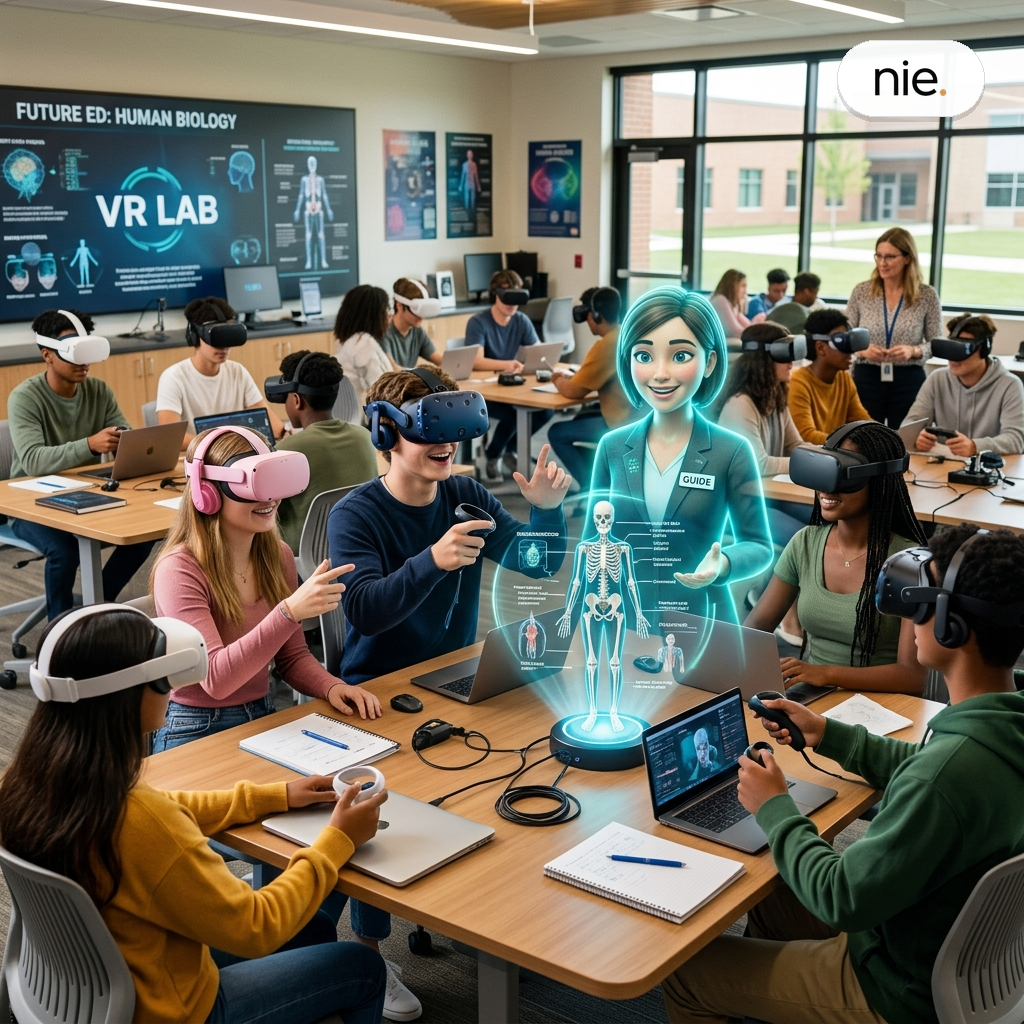
Sách giáo khoa Sinh học truyền thống thường biến những cơ chế phức tạp như quá trình nguyên phân hay chuỗi truyền electron thành những hình ảnh tĩnh lặng, vô hồn. Học sinh nhìn vào đó, ghi nhớ vẹt, rồi quên sạch sau khi thi xong. Vấn đề không nằm ở sự lười biếng của người học, mà là ở cách thức truyền tải kiến thức đã quá cũ kỹ. Khi chúng ta cố gắng nhồi nhét tư duy sinh học vào những trang giấy khô khan, chúng ta đang thất bại trong việc kích thích sự tò mò tự nhiên của con người. Tích hợp AI vào một website AI môn Sinh học không đơn thuần là thêm một con chatbot để trả lời bài tập về nhà. Đó là việc tái cấu trúc cách dữ liệu sinh học được tiếp cận, biến các khái niệm trừu tượng thành những mô phỏng có khả năng phản hồi trực tiếp với người dùng. Tuy nhiên, sự kỳ vọng quá mức vào công nghệ này thường dẫn đến những dự án tốn kém nhưng hiệu quả bằng không. Nhiều website giáo dục vội vã cài đặt các plugin AI mà thiếu đi nền tảng dữ liệu khoa học kiểm chứng, kết quả là những câu trả lời sai lệch gây nguy hiểm cho tư duy người học. Để công nghệ thực sự phục vụ giáo dục, chúng ta cần gạt bỏ những hào nhoáng bề ngoài để nhìn thẳng vào tính khả thi kỹ thuật.
Bản chất vận hành của các hệ thống AI sinh học
Các công cụ AI hiện nay trên website giáo dục vận hành dựa trên cơ chế xử lý ngôn ngữ tự nhiên (NLP) và nhận diện hình ảnh. Thay vì chỉ tìm kiếm từ khóa trong cơ sở dữ liệu, một website tích hợp AI thực thụ phải đóng vai trò như một trợ lý giảng dạy có khả năng hiểu ngữ cảnh. Khi học sinh hỏi về sự khác biệt giữa ti thể và lục lạp, hệ thống không nên chỉ trích xuất một đoạn văn dài, mà phải phân tích mức độ hiểu biết của học sinh để đưa ra phản hồi phù hợp. Cơ chế cốt lõi nằm ở việc kết hợp giữa mô hình ngôn ngữ lớn (LLM) được tinh chỉnh (fine-tuned) trên bộ dữ liệu chuyên ngành sinh học và các API mô phỏng sinh học chuyên biệt. Rất phức tạp. Nếu chỉ sử dụng các chatbot đại trà, dữ liệu đầu ra sẽ thường xuyên bị “ảo giác” (hallucination), tạo ra các thông tin khoa học sai lệch một cách đầy tự tin. Đây là tử huyệt của nhiều dự án giáo dục trực tuyến.
Lợi ích và so sánh tính năng thực tế
| Tính năng | Phương pháp cũ | Website AI môn Sinh học |
|---|---|---|
| Giải đáp thắc mắc | Tra cứu thủ công, chờ giáo viên | Phản hồi tức thời 24/7 |
| Hình ảnh minh họa | Hình ảnh tĩnh 2D | Mô hình 3D tương tác |
| Lộ trình học tập | Cố định cho mọi học sinh | Cá nhân hóa theo năng lực |
Quy trình tích hợp AI giáo dục
Rào cản triển khai và thực tế vận hành
Việc đưa AI vào dạy học không bao giờ là câu chuyện cắm-và-chạy. Rào cản lớn nhất là dữ liệu rác. Nếu nguồn tài liệu đầu vào không được chọn lọc, AI sẽ học luôn cả những sai sót trong kiến thức phổ thông. Ngoài ra, chi phí duy trì API từ các nhà cung cấp mô hình lớn như OpenAI hay Google là con số không hề nhỏ. Một website có lượng truy cập cao sẽ đối mặt với hóa đơn hàng ngàn đô la mỗi tháng. Để giải quyết, người quản trị website phải cân nhắc sử dụng các mô hình nguồn mở (như Llama 3) được lưu trữ trên server riêng. Cách này đòi hỏi năng lực kỹ thuật cao về hạ tầng, nhưng đổi lại là sự kiểm soát hoàn toàn về dữ liệu. Bảo mật thông tin người dùng cũng là một ẩn số lớn. Dữ liệu về lộ trình học tập của học sinh là tài sản giá trị, cần phải được bảo vệ bằng các giao thức mã hóa nghiêm ngặt, tránh việc để lộ hồ sơ học tập ra ngoài.
FAQ: Giải đáp các câu hỏi thường gặp
AI có thay thế được giáo viên môn Sinh học không?
Câu trả lời ngắn gọn là không. AI chỉ là công cụ hỗ trợ để xử lý khối lượng thông tin khổng lồ và cá nhân hóa lộ trình học. Giáo viên vẫn nắm quyền quyết định về tư duy phản biện, đạo đức sinh học và kỹ năng thực hành thí nghiệm mà AI hiện tại chưa thể thay thế hoàn toàn.
Dữ liệu nào cần được cung cấp cho hệ thống AI?
Hệ thống cần các bộ giáo trình chuẩn, sách tham khảo uy tín và kho câu hỏi ôn tập có lời giải thích chi tiết. Việc nạp dữ liệu cần thông qua quy trình RAG (Retrieval-Augmented Generation) để đảm bảo câu trả lời luôn bám sát nguồn tài liệu đáng tin cậy.
Chi phí vận hành website AI có quá cao cho cá nhân?
Nếu bạn biết cách tối ưu hóa việc sử dụng mô hình mã nguồn mở và lưu trữ cục bộ, chi phí sẽ nằm trong tầm kiểm soát. Tuy nhiên, nếu phụ thuộc vào các dịch vụ đám mây cao cấp cho mọi tác vụ, tài chính sẽ trở thành một vấn đề nan giải.
Việc xây dựng một công cụ hỗ trợ giáo dục bằng AI cần cái tâm của nhà giáo dục và cái đầu lạnh của nhà phát triển công nghệ. Để tránh lãng phí nguồn lực và đạt được sự chuẩn xác cao nhất, các đơn vị giáo dục cần tìm kiếm những đối tác am hiểu cả về sư phạm lẫn giải pháp phần mềm chuyên sâu. NIE.vn cung cấp các dịch vụ thiết kế website chuẩn SEO, phần mềm bản quyền và giải pháp E-learning chuyên nghiệp từ Hộ kinh doanh Nguyễn Thông, giúp các tổ chức giáo dục hiện thực hóa mô hình lớp học số một cách tin cậy và bền vững. Đừng để công nghệ chỉ là lớp vỏ hào nhoáng, hãy để nó thực sự thay đổi cách học sinh tiếp cận kiến thức sinh học.
2. English Version
Traditional biology textbooks often reduce complex, dynamic mechanisms—such as mitosis or the intricate electron transport chain—into static, lifeless diagrams. Students stare at these pages, rote-memorizing information only to forget it the moment the exam ends. The problem isn’t a lack of student initiative; it is a pedagogical approach that has become obsolete. When we force biological concepts into dry, stagnant print, we fail to ignite the natural human instinct for curiosity. Integrating AI into a Biology-focused website is about much more than simply bolting on a chatbot to help with homework. It is a fundamental restructuring of how biological data is accessed, transforming abstract theories into interactive simulations that respond in real-time to the user. Yet, the hype surrounding this technology often leads to expensive projects that yield zero results. Many educational platforms rush to install AI plugins without a foundation of verified scientific data, resulting in “hallucinated” answers that can actually mislead or misinform the student. For technology to truly serve education, we must strip away the superficial bells and whistles and focus squarely on technical feasibility and pedagogical integrity.
The Operating Mechanics of Biological AI Systems
Current AI tools integrated into educational websites rely on Natural Language Processing (NLP) and advanced computer vision. Rather than merely acting as a glorified search engine that parses keywords from a database, a true AI-driven biology portal acts as a context-aware teaching assistant. If a student inquires about the fundamental differences between mitochondria and chloroplasts, the system should not simply spit out a generic block of text. Instead, it must gauge the student’s level of understanding and provide a response that is appropriately tailored. The core of this mechanism lies in the synergy between Large Language Models (LLMs) fine-tuned on specialized biological datasets and proprietary bio-simulation APIs. It is a sophisticated process. Relying on “off-the-shelf” generic chatbots often leads to AI “hallucinations”—where the model presents scientifically inaccurate information with unnerving confidence. This is the Achilles’ heel for many online education initiatives.
| Feature | Traditional Method | AI-Powered Biology Website |
|---|---|---|
| Query Support | Manual lookup, waiting for teacher | Instant 24/7 responsiveness |
| Visual Aids | Static 2D images | Interactive 3D simulations |
| Learning Path | One-size-fits-all curriculum | Personalized to individual ability |
Educational AI Integration Workflow
Implementation Barriers and Operational Realities
Introducing AI into the classroom is never a simple “plug-and-play” scenario. The most significant obstacle is data quality. If the input material is unfiltered or flawed, the AI will inevitably learn and propagate those inaccuracies. Furthermore, the operational costs of maintaining APIs from major providers like OpenAI or Google can be astronomical. A website with high traffic can quickly rack up thousands of dollars in monthly usage fees. To navigate this, administrators must weigh the benefits of utilizing open-source models (such as Llama 3) hosted on private servers. While this demands high-level technical expertise in infrastructure, the trade-off is complete data sovereignty and control. Additionally, user data privacy is a massive concern. A student’s learning trajectory is a high-value asset; it must be shielded by rigorous encryption protocols to ensure that academic profiles remain secure and confidential.
FAQ: Frequently Asked Questions
Can AI replace a professional Biology teacher?
In short: no. AI is merely a supporting tool, designed to handle massive volumes of information and personalize learning paths. Teachers retain the essential role of fostering critical thinking, upholding bioethics, and guiding practical laboratory skills—areas where current AI technology remains fundamentally limited.
What kind of data should be fed into the AI system?
The system requires high-quality, standardized textbooks, reputable reference materials, and comprehensive question banks with detailed, verified explanations. Ingesting this data must occur via a Retrieval-Augmented Generation (RAG) process to ensure that every response remains tethered to reliable, evidence-based sources.
Are the operational costs of an AI website too high for individuals?
If you possess the technical know-how to optimize open-source models and leverage local hosting, the costs are entirely manageable. However, if you rely exclusively on premium, enterprise-level cloud services for every task, the financial burden will quickly become unsustainable.
Building an AI-powered educational tool requires the heart of an educator and the analytical, disciplined mind of a technology developer. To avoid wasting resources and to ensure the highest degree of academic precision, educational institutions must seek partners who are well-versed in both pedagogical methodology and specialized software development. NIE.vn offers premium SEO-optimized website design services, licensed software, and professional E-learning solutions from the Nguyen Thong business entity. We help educational organizations transition to a digital classroom model that is both reliable and sustainable. Do not let technology become just a superficial veneer; let it be the catalyst that fundamentally transforms how students explore the wonders of biology.
3. 中文版
传统的生物教科书往往将复杂的生理机制(如细胞有丝分裂或电子传递链)固化为静止且枯燥的图表。学生们盯着这些内容机械记忆,考完试便抛诸脑后。这并非学生的学习懒惰,而是源于陈旧的知识传授方式。当我们试图将灵动的生物学思维塞进干瘪的纸页时,我们实际上正在扼杀人类探索科学的天性。在生物学AI网站中集成人工智能,绝不仅仅是简单地添加一个聊天机器人来辅助完成作业。其核心在于重构获取生物学数据的路径,将抽象概念转化为能够与用户实时互动的仿真模型。然而,对该技术的过度预期往往导致巨额资金投入却收效甚微。许多教育网站在缺乏经科学验证的数据基准前提下,盲目堆砌AI插件,最终产出的谬误性答案反而误导了学习者的思维逻辑。为了让技术真正赋能教育,我们需要剥离华而不实的营销表象,直面技术落地与工程实践的本质。
生物学AI系统的运行本质
目前教育类网站中的AI工具主要依赖自然语言处理(NLP)和图像识别技术。一个真正成熟的AI整合网站,不能仅限于数据库的关键字检索,而应扮演具备语境感知能力的“智能助教”角色。当学生询问线粒体与叶绿体的区别时,系统不应只是简单摘录一段长文,而应根据学生的知识水平,动态调整反馈的深度与广度。其核心机制在于:将经过生物学专业数据集微调(Fine-tuning)的大语言模型(LLM)与专业的生物仿真API进行深度耦合。这是一个复杂的过程。如果仅调用通用的市面聊天机器人,输出数据极易产生“幻觉”(Hallucination),进而一本正经地传播错误的科学知识。这正是许多在线教育项目折戟沉沙的“致命弱点”。
优势对比与实际效能
| 功能维度 | 传统教学模式 | 生物学AI网站 |
|---|---|---|
| 答疑解惑 | 手动查阅,等待教师批复 | 24/7 实时智能交互 |
| 视觉表现 | 静态 2D 平面图像 | 互动式 3D 仿真模型 |
| 学习路径 | 千篇一律的标准化教学 | 基于能力模型的个性化定制 |
教育AI集成流程
实施障碍与运维现实
将AI引入教育绝非简单的“即插即用”。最大的障碍在于“垃圾数据”。若输入源未经过滤,AI将不仅习得知识,还会一并吸收教科书中的陈旧错误或逻辑误区。此外,来自OpenAI或Google等大型模型供应商的API调用成本极高。一个高流量的网站每月可能面临数千美元的账单。为了解决这一痛点,网站运维者必须考虑使用部署在自建服务器上的开源模型(如Llama 3)。这种方案虽对基础设施的工程能力要求极高,但换来的是对数据的完全掌控。用户信息安全同样是一个核心隐患。学生个人的学习轨迹数据是极具价值的资产,必须通过严苛的加密协议加以保护,严防学习档案泄露。
常见问题解答 (FAQ)
AI能否彻底取代生物老师?
简短的回答是:不能。AI仅是处理海量信息和实现个性化学习路径的强力工具。对于批判性思维、生命伦理以及实操实验指导,教师所具备的教育核心价值目前是AI无法替代的。
系统需要配置哪些生物学数据?
系统需要集成标准教材、权威参考文献以及具备详尽解析的习题库。数据导入必须经过检索增强生成(RAG)流程处理,以确保AI输出的答案始终严谨地锚定在可靠的文献源之上。
AI网站的运维成本对于个人而言是否过高?
如果您能通过本地化部署和开源模型优化方案,成本是完全可控的。反之,如果完全依赖高端云服务进行所有任务处理,财务压力将成为项目可持续性的最大挑战。
构建AI教育辅助工具,既需要教育工作者的博爱仁心,也需要技术开发者的冷静睿智。为避免资源浪费并达到最高的科学严谨性,教育机构应当寻找既懂教学法(Pedagogy)又精通专业软件解决方案的合作伙伴。NIE.vn 专注于提供 SEO 标准化的网站建设、正版软件授权及专业化 E-learning 解决方案,由 Nguyen Thong 个体户经营,旨在助力教育机构可靠且可持续地实现数字化教学转型。别让技术沦为华丽的空壳,应让它真正触达知识的本质,重塑学生学习生物学的每一程。
🚀 WordPress 7.1 Tốc Độ Cao
Tối ưu Core Web Vitals, LiteSpeed Enterprise Cache & Redis Object Cache giúp tải trang dưới 0.8 giây.
📱 Giao Diện Responsive Chuẩn
Thiết kế chuẩn Mobile First, tương thích hoàn hảo mọi thiết bị từ iPhone, Android đến Tablet và Màn hình 4K.
🏧 Thanh Toán VietQR Tự Động
Tạo mã QR động SeABank/Sacombank xác nhận đơn hàng tức thì 24/7 không qua trung gian, phí duy trì 0đ.
📦 Quản Lý Đơn Hàng HPOS
Cơ sở dữ liệu đơn hàng siêu tốc độ High-Performance Order Storage chịu tải hàng triệu giao dịch mượt mà.
🛡️ Bảo Mật Đa Tầng
Chống tấn công DDoS, mã hóa SSL 256-bit, bảo vệ REST API và sao lưu tự động (Auto-backup) hàng ngày.
📋 Hỗ Trợ Đăng Ký Bộ Công Thương
Hỗ trợ hoàn thiện hồ sơ thông báo website TMĐT với Bộ Công Thương theo Nghị định 52/2013 và 85/2021.
🎓 Đào Tạo Quản Trị Website
Bàn giao toàn bộ mã nguồn, video hướng dẫn quản trị chi tiết và đào tạo trực tiếp cho nhân viên vận hành.
📞 Bảo Hành & Hỗ Trợ Trọn Đời
Hỗ trợ kỹ thuật 24/7 qua Hotline/Zalo, cam kết đồng hành xử lý sự cố trong suốt vòng đời dự án.