
1. Phiên bản Tiếng Việt
Hàng thập kỷ qua, giảng dạy Vật lý vẫn luẩn quẩn trong vòng lặp: thầy vẽ hình trên bảng, trò tưởng tượng trong đầu. Chúng ta ép học sinh hình dung các cấu trúc phân tử phức tạp hay quỹ đạo các hành tinh chỉ qua những nét phấn phẳng lì. Đây là một sai lầm chết người. Kiến thức khoa học tự nhiên đòi hỏi sự cảm nhận về không gian và tương tác, những thứ mà sách giáo khoa truyền thống hoàn toàn bất lực. Khi người học không thấy được “chuyển động”, họ sẽ sớm từ bỏ tư duy logic để chuyển sang học vẹt. Mọi nỗ lực nhồi nhét công thức trở nên vô nghĩa nếu học sinh không nắm bắt được bản chất vật lý phía sau.
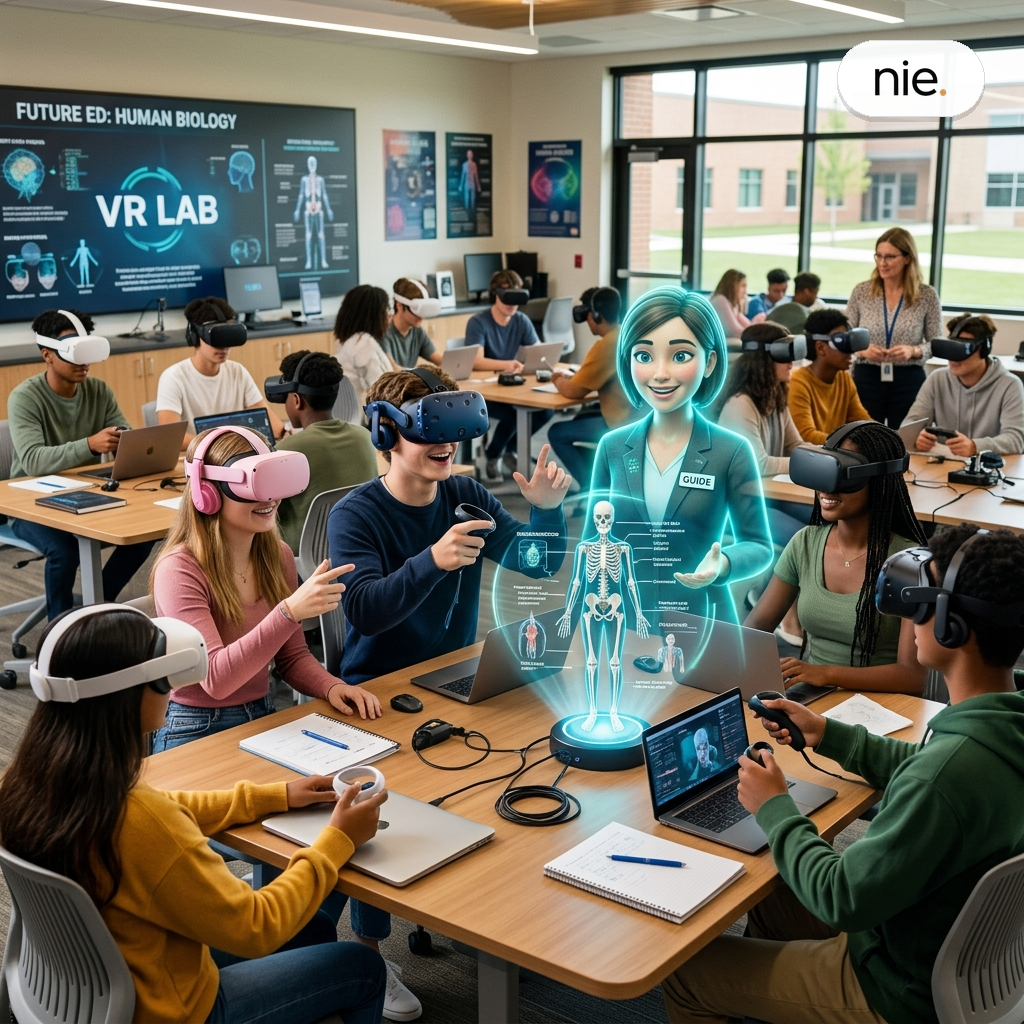
Việc tích hợp mô phỏng 3D Vật lý vào bài giảng không phải là một món đồ chơi hào nhoáng để thu hút sự chú ý. Đó là giải pháp bắt buộc để kéo người học ra khỏi sự mơ hồ. Tuy nhiên, đừng nhầm lẫn giữa hiệu ứng thị giác và hiệu quả sư phạm. Một mô hình 3D rườm rà, thiếu tương tác thực tế chẳng khác nào một bộ phim không có kịch bản. Nó gây nhiễu, làm loãng trọng tâm kiến thức và cuối cùng biến giờ học thành một buổi xem hoạt hình đắt đỏ nhưng thiếu chiều sâu.
Bản chất cốt lõi của mô phỏng 3D trong giảng dạy
Cơ chế cốt lõi của mô phỏng 3D nằm ở việc tạo ra các “phòng thí nghiệm ảo” nơi các định luật vật lý được mô hình hóa toán học thay vì mô phỏng hình ảnh đơn thuần. Khi một học sinh kéo thả một biến số—ví dụ như khối lượng hoặc vận tốc—phần mềm phải tính toán lại toàn bộ kết quả dựa trên các thuật toán vật lý thời gian thực. Nếu không có lớp nền tảng toán học này, mô hình 3D chỉ là những đoạn clip vô tri. Sự khác biệt nằm ở khả năng “trải nghiệm thất bại”. Trong môi trường 3D, học sinh có thể làm sai, thay đổi các thông số bất hợp lý để thấy hệ thống sụp đổ ngay trước mắt. Đây chính là bản chất của tư duy khoa học: quan sát, giả thuyết và kiểm chứng.
Giá trị thực tế qua lăng kính so sánh
Sự chuyển dịch từ hình vẽ tĩnh sang mô phỏng 3D yêu cầu một cái nhìn tỉnh táo. Bảng dưới đây phác họa sự khác biệt giữa hai phương thức truyền đạt này để người quản lý giáo dục có cái nhìn khách quan hơn:
| Tiêu chí | Sách giáo khoa tĩnh | Mô phỏng 3D Vật lý |
|---|---|---|
| Cơ chế tiếp nhận | Thụ động, ghi nhớ | Chủ động, trải nghiệm |
| Phản hồi | Không có | Tức thì, chính xác |
| Khả năng tùy biến | Cố định | Tùy chỉnh biến số |
Rào cản triển khai và những cái bẫy vô hình
Việc nhồi nhét quá nhiều công cụ như video, audio hay trắc nghiệm vào một quyển sách điện tử là một sai lầm phổ biến. Khi thiết kế bài giảng, người dạy thường tham lam. Họ muốn chèn mọi thứ vào một trang. Kết quả là học sinh bị xao nhãng. Một giáo trình điện tử hiệu quả cần sự tinh giản. Nếu video không giúp giải thích một hiện tượng mà chỉ để “cho đẹp”, hãy xóa nó đi. Nếu câu hỏi kiểm tra không bám sát mục tiêu bài học, chúng chỉ làm mất thời gian quý báu.
Chi phí triển khai không chỉ nằm ở tiền mua phần mềm. Nó nằm ở chi phí thời gian để giáo viên làm quen với công nghệ. Nhiều trường học mua phần mềm xịn nhưng cuối cùng chỉ dùng như một máy chiếu slide. Điều này gây lãng phí khủng khiếp. Giải pháp là tập trung vào các công cụ thiết kế sách điện tử hỗ trợ chèn đa phương tiện có tính mở, dễ dàng cho người dùng cuối tự tay tinh chỉnh theo logic sư phạm cá nhân thay vì phụ thuộc vào các module cứng nhắc của nhà sản xuất.
Giải đáp thắc mắc thường gặp
Mô phỏng 3D có thay thế được thí nghiệm thực tế?
Hoàn toàn không. Mô phỏng chỉ thay thế khi thí nghiệm quá nguy hiểm, tốn kém hoặc không thể quan sát bằng mắt thường. Thí nghiệm thực tế mang lại cảm giác vật lý, sự va chạm và các sai số ngẫu nhiên mà máy tính không bao giờ tái hiện hoàn hảo. Hãy coi chúng là hai thực thể bổ trợ, không phải đối thủ.
Chi phí vận hành hệ thống này có đắt đỏ không?
Chi phí đầu tư ban đầu cho bản quyền phần mềm và thiết bị đầu cuối là một rào cản. Tuy nhiên, nếu so với việc duy trì phòng thí nghiệm vật lý với các thiết bị dễ hư hỏng, mô phỏng 3D là phương án dài hạn tối ưu về tài chính.
Làm sao để tích hợp video và audio hiệu quả trong bài giảng?
Đừng chèn video dài hơn 3 phút. Audio nên dùng để dẫn dắt hoặc giải thích các khái niệm trừu tượng, thay vì đọc lại nội dung có sẵn trên màn hình. Hãy để học sinh làm chủ tốc độ phát, dừng và suy ngẫm.
Kết luận và giải pháp đồng hành
Mô phỏng 3D Vật lý là công cụ mạnh mẽ, nhưng nó đòi hỏi một tư duy thiết kế bài giảng chỉn chu. Công nghệ chỉ phát huy sức mạnh khi nằm trong tay người biết tận dụng nó đúng cách. Nếu bạn đang tìm kiếm lộ trình chuyển đổi bài giảng của mình thành môi trường học tập điện tử chuyên nghiệp, các giải pháp từ Hộ kinh doanh Nguyễn Thông và đội ngũ NIE.vn có thể là điểm tựa tin cậy. Từ thiết kế website học tập chuẩn SEO cho đến phần mềm bản quyền hỗ trợ E-learning, chúng tôi cung cấp những gì thực tế nhất để bài giảng của bạn không chỉ bắt mắt mà còn hiệu quả trên từng trang nội dung.
2. English Version
For decades, physics education has been trapped in a repetitive loop: the teacher sketches diagrams on the chalkboard, and the students struggle to visualize the concepts in their heads. We force students to grasp complex molecular structures or planetary orbits through nothing more than flat, static chalk lines. This is a fundamental flaw. Natural sciences demand spatial awareness and interactivity—elements that traditional textbooks are completely ill-equipped to provide. When learners cannot “see” the physics in motion, they inevitably abandon logical reasoning in favor of rote memorization. Every effort to cram formulas into their minds becomes meaningless if the students fail to grasp the core physical essence behind them.
Integrating 3D physics simulations into lectures is not about using a flashy toy to grab attention. It is a mandatory evolution to pull learners out of the fog of ambiguity. However, one must not mistake visual flair for pedagogical effectiveness. A cumbersome 3D model that lacks genuine interactivity is akin to a film without a script. It creates noise, dilutes the focus of the lesson, and ultimately turns a class into an expensive but hollow screening of an animation.
The Core Essence of 3D Simulation in Pedagogy
The true engine of 3D simulation lies in creating “virtual laboratories” where physical laws are mathematically modeled rather than merely animated. When a student drags and drops a variable—such as mass, velocity, or friction—the software must recalculate the entire outcome based on real-time physics algorithms. Without this mathematical foundation, 3D models are little more than soulless video clips. The real differentiator is the ability to “experience failure.” In a 3D environment, students are encouraged to make mistakes, to manipulate parameters in absurd ways just to watch the system collapse before their eyes. This is the very essence of scientific thinking: observation, hypothesis, and verification.
Practical Value Through a Comparative Lens
Shifting from static diagrams to 3D simulation requires a sober, objective perspective. The table below outlines the differences between these two modes of instruction to provide educational administrators with a clearer view:
| Criteria | Static Textbooks | 3D Physics Simulations |
|---|---|---|
| Learning Mode | Passive, memorization-based | Active, experiential |
| Feedback | None | Instant and precise |
| Flexibility | Rigid and fixed | Customizable variables |
Implementation Barriers and Invisible Traps
Cluttering an e-textbook with excessive video, audio, and quizzes is a common mistake. Educators are often tempted by the “more is better” fallacy when designing lectures, trying to cram every resource into a single page. The result? Student distraction. An effective e-curriculum requires ruthless simplicity. If a video doesn’t clarify a specific phenomenon and is merely there for “aesthetic value,” delete it. If quiz questions do not align strictly with the lesson objectives, they are merely squandering valuable time.
The cost of implementation isn’t just about software licensing fees; it’s about the “time cost” of training teachers to master the technology. Many schools purchase high-end software only to use it as a glorified digital slide projector. This is a profound waste of resources. The solution lies in focusing on e-book design tools that support open, multimedia-rich frameworks—tools that allow the end-user to personally adjust the pedagogical logic, rather than being shackled to the rigid, proprietary modules of a software manufacturer.
Frequently Asked Questions
Can 3D simulations replace hands-on laboratory experiments?
Absolutely not. Simulations should only serve as a substitute when experiments are too dangerous, prohibitively expensive, or impossible to observe with the naked eye. Real-world experiments provide tactile sensations, physical collisions, and the inherent, messy variability of nature that computers can never perfectly replicate. View these tools as partners, not competitors.
Is the operational cost of this system expensive?
While the initial investment in software licenses and terminal hardware is a significant barrier, when compared to the long-term maintenance costs of a physical physics lab—which involves fragile and perishable equipment—3D simulation is often the more financially sustainable path over time.
How can I integrate video and audio effectively into my lectures?
Avoid using videos longer than three minutes. Audio should be used to guide the user or clarify abstract concepts, rather than simply reading the content already visible on the screen. Always empower the student to control the playback speed, pause, and reflect.
Conclusion and Professional Support
3D Physics simulation is a formidable pedagogical tool, but it demands thoughtful instructional design. Technology only reveals its true potential in the hands of those who know how to wield it correctly. If you are seeking a roadmap to transform your curriculum into a professional e-learning environment, the solutions provided by Nguyen Thong business and the NIE.vn team can serve as your trusted foundation. From SEO-optimized learning websites to high-end e-learning software, we provide the practical tools to ensure your lectures are not just visually engaging, but effective at every turn of the page.
3. 中文版
几十年来,物理教学一直陷入一个循环怪圈:老师在黑板上画图,学生在脑中进行抽象构建。我们强迫学生仅凭几道平面的粉笔痕迹去想象复杂的分子结构或是行星运行轨迹,这无疑是一个致命的误区。自然科学知识的习得,本质上需要空间感知与动态交互,而传统教科书对此完全无能为力。当学习者无法观测到“运动”本身,他们便会放弃逻辑思考,转而求助于死记硬背。如果学生无法领悟物理规律背后的本质,那么任何填鸭式的公式堆砌都将变得毫无意义。
将3D物理仿真融入课堂,并非为了吸引眼球而准备的华丽玩具。这是将学习者从认知模糊中解救出来的必要方案。然而,切勿混淆“视觉特效”与“教学实效”的概念。一个繁琐且缺乏实际交互的3D模型,不过是一部没有剧本的电影。它只会产生干扰,稀释核心知识点,最终让教学变成一场昂贵却流于表面的动画观影课。
物理仿真教学的核心本质
3D仿真的核心机制在于创建“虚拟实验室”。在这种环境下,物理定律是通过数学逻辑进行建模的,而非单纯的图像展示。当学生拖动变量——例如质量或速度——软件必须基于实时物理算法重新计算所有结果。如果没有这一底层的数学逻辑支撑,3D模型仅仅是枯燥的视频片段。其真正的差异在于提供了一种“试错体验”。在3D环境中,学生可以进行错误操作,输入不合理的参数,从而直观地观察到系统的崩塌。这正是科学思维的核心:观察、假设与验证。
透过比较看其实际价值
从静态图形向3D仿真的范式转换,需要一种清醒的认知。下表概述了两种传达方式的区别,旨在帮助教育管理者建立更客观的视角:
| 评价维度 | 静态教科书 | 3D物理仿真 |
|---|---|---|
| 接收机制 | 被动接受,机械记忆 | 主动探索,沉浸体验 |
| 反馈机制 | 无反馈 | 即时反馈,数据精准 |
| 定制化能力 | 固定内容 | 变量可自定义调节 |
部署障碍与隐性陷阱
在电子书中堆砌过多的视频、音频或测评模块是一个普遍的误区。在课程设计时,教师往往容易陷入“贪多”的陷阱,试图将所有内容塞入一个页面。结果往往适得其反,导致学生注意力分散。高效的电子教材需要追求极致的精简。如果一个视频不能有效解释现象,而只是为了“好看”,那就果断将其删除。如果检测题目不贴合学习目标,它们只会浪费宝贵的课堂时间。
部署成本不仅限于软件购买费用,还包括教师熟悉新技术的隐性时间成本。许多学校投入重金购买高级软件,最终却仅仅将其当作播放PPT的投影机使用,这造成了极大的资源浪费。解决方案在于专注于那些支持多媒体插入且具备开放性的电子教材设计工具,让终端用户能够根据自身的教学逻辑进行自主微调,而非受限于厂家预设的僵化模块。
常见问题解答 (FAQ)
3D仿真能否替代现实实验?
答案是否定的。仿真仅应在实验过程过于危险、昂贵或无法肉眼观察时作为替代方案。现实实验带来的物理触感、碰撞交互以及不可控的随机误差,是计算机系统无法完美模拟的。请将两者视为互补的伙伴,而非互相对立的竞争者。
该系统的运营成本是否昂贵?
虽然软件授权和终端设备的初始投资是一道门槛,但与维护物理实验室中易损设备的成本相比,3D仿真从长远看是更具财务优化效应的方案。
如何在教学中有效整合音频与视频?
请避免插入超过3分钟的长视频。音频应被用于引导或解释抽象概念,而非复读屏幕上已有的文字。请将节奏控制权交给学生,让他们能够随时暂停、回放并进行思考。
结语与解决方案建议
3D物理仿真是强大的工具,但它要求设计者具备缜密的教学设计思路。科技只有在懂得利用它的人手中才能发挥最大威力。如果您正在寻找将课程转型为专业化电子学习环境的路径,Nguyen Thong商户及NIE.vn团队提供的解决方案将是您值得信赖的后盾。从符合SEO标准的学术网站设计到支持在线教学的版权软件,我们致力于为您提供最务实的工具,确保您的课程内容不仅外表精美,更能在每一个知识点上落地见效。
🤖 Đội Ngũ AI Tự Hành 24/7
Tự động hóa quy trình nghiệp vụ, cào dữ liệu, xử lý tài liệu và đối soát báo cáo liên tục không ngừng nghỉ.
✍️ AI Sáng Tạo Nội Dung
Tự động viết bài chuẩn SEO, thiết kế Infographic và phân phối đa kênh lên Website, Facebook Fanpage.
🔗 Kết Nối n8n & Webhooks
Tích hợp liền mạch với Google Workspace, CRM, Zalo OA, Telegram và hệ thống cơ sở dữ liệu doanh nghiệp.
🧠 Đa Mô Hình AI Tiên Tiến
Ứng dụng linh hoạt Google Gemini Pro, OpenAI GPT, Claude 3.5 và các mô hình mã nguồn mở DeepSeek/Ollama.
🎓 Khóa Học AI Thực Chiến
Chương trình đào tạo từ cơ bản đến nâng cao: Làm chủ AI Agents, Prompt Engineering và Tự động hóa 0đ chi phí.
💎 Tài Khoản AI Doanh Nghiệp
Cung cấp gói tài khoản Google One 2TB, Gemini Advanced, ChatGPT Plus bản quyền giá ưu đãi.
🏢 Đơn Vị Pháp Lý Rõ Ràng
HỘ KINH DOANH CÔNG NGHỆ VÀ GIÁO DỤC NGUYỄN THÔNG (MST: 6000861747-001). Cung cấp hóa đơn và hợp đồng đầy đủ.
🔒 Bảo Mật Dữ Liệu Khách Hàng
Tuân thủ nghiêm ngặt Nghị định 13/2023/NĐ-CP về bảo vệ dữ liệu cá nhân và bí mật kinh doanh của khách hàng.