
1. Phiêu lưu vào ngôn ngữ: Tích hợp AI vào Website giáo dục để dạy môn Ngữ văn
Ngữ văn thường bị xem là môn học của những cảm tính mơ hồ, nơi điểm số phụ thuộc phần lớn vào cái nhìn chủ quan của người chấm. Học sinh đối diện với những đề bài sáo rỗng, còn giáo viên mệt nhoài với hàng trăm bài viết mang cùng một tư duy rập khuôn. Sự xuất hiện của website AI môn Ngữ văn không phải là phép màu biến học sinh thành nhà văn, nhưng nó là công cụ hiệu chỉnh tư duy cực kỳ sắc bén. Nếu chúng ta vẫn giữ cách dạy truyền thống – chép và đọc – thì học sinh sẽ mãi là những “cỗ máy ghi âm”. Công nghệ AI không tới để thay thế tâm hồn người viết, nó tới để bẻ gãy sự lười biếng trong tư duy.
Thách thức ở đây không nằm ở khả năng của máy móc, mà ở cách chúng ta đặt ra yêu cầu. Làm sao để một thuật toán hiểu được cái “tình” trong thơ Xuân Diệu hay sự thâm trầm của Nguyễn Du? Thực tế, AI chỉ giỏi xử lý cấu trúc và logic văn bản. Khi tích hợp vào website giáo dục, nó đóng vai trò là một “người phản biện” không biết mệt mỏi, buộc học sinh phải bảo vệ luận điểm của mình thay vì chỉ copy những mẫu văn hay có sẵn. Đó là sự thay đổi bản chất của việc học: từ tiếp nhận thụ động sang tranh biện chủ động. Không còn chỗ cho sự hời hợt.
Bản chất của việc tích hợp AI trong giảng dạy văn chương
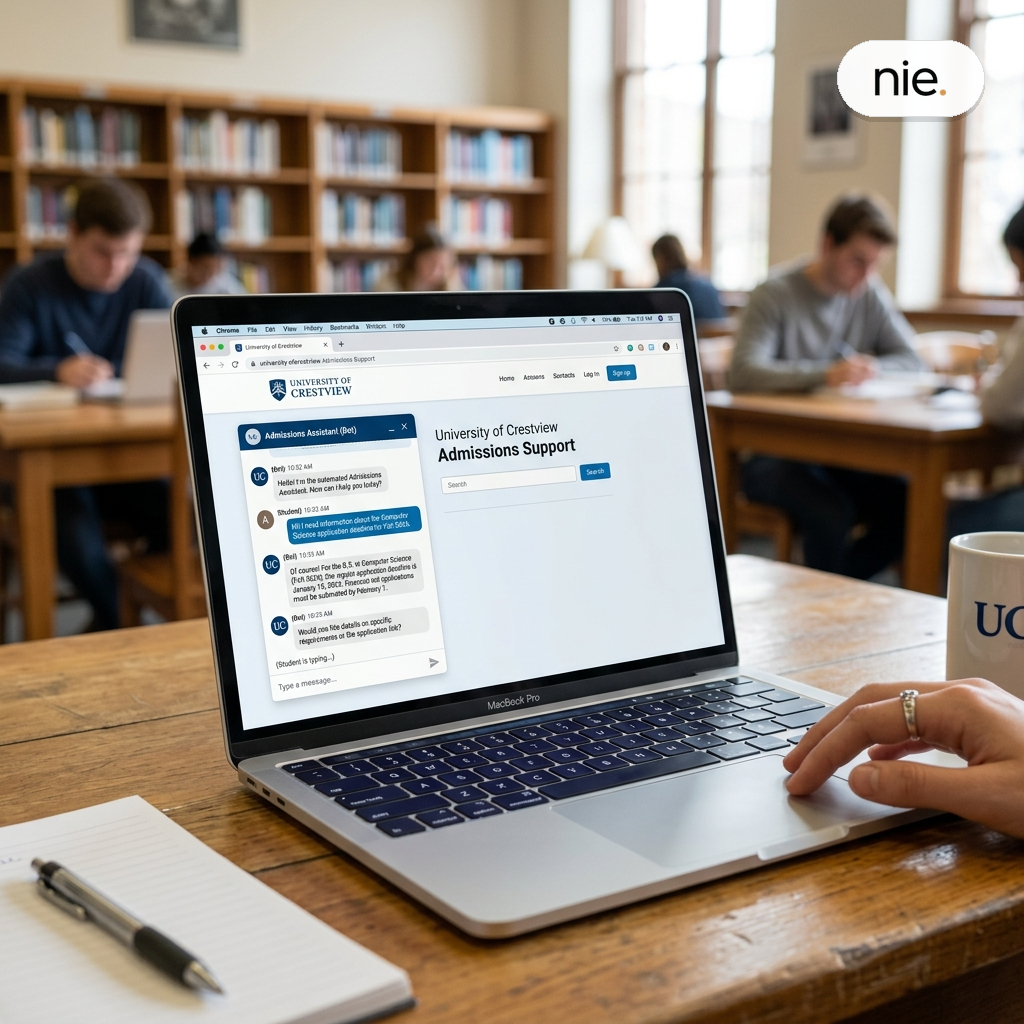
Vận hành một website tích hợp AI cho Ngữ văn đòi hỏi nhiều hơn là chỉ chèn một API của ChatGPT vào góc màn hình. Cốt lõi của nó nằm ở việc xử lý ngôn ngữ tự nhiên (NLP) được tinh chỉnh riêng cho ngữ cảnh tiếng Việt. Hệ thống cần được “huấn luyện” trên các ngữ liệu chuẩn mực, thay vì các dữ liệu rác trên mạng xã hội. Khi một học sinh nhập bài làm, AI không nên chỉ đưa ra điểm số; nó cần phải thực hiện phân tích cấu trúc, nhận diện lỗi logic trong lập luận và gợi ý các tầng nghĩa mà người viết đã bỏ lỡ.
Mỗi lượt tương tác của học sinh là một lần hệ thống cần phân loại được tư duy của người viết. Nếu chỉ dùng AI để tạo văn mẫu, website đó đã thất bại ngay từ khi bắt đầu. Một hệ thống hiệu quả phải đóng vai trò như một người biên tập khó tính, luôn đặt câu hỏi ngược lại: “Tại sao bạn chọn từ ngữ này?” hoặc “Luận điểm này có mâu thuẫn với ý trước đó không?”. Sự can thiệp này làm lộ rõ những lỗ hổng trong kiến thức nền tảng của học sinh mà đôi khi giáo viên không đủ thời gian để chỉ ra cho từng cá nhân.
Giá trị thực tế qua bảng so sánh
| Tiêu chí | Phương pháp truyền thống | Website tích hợp AI |
|---|---|---|
| Phản hồi bài làm | Chậm, phụ thuộc vào giáo viên. | Ngay lập tức, chi tiết theo từng đoạn. |
| Tính tùy biến | Lớp học chung một lộ trình. | Cá nhân hóa theo tư duy người học. |
| Khả năng tư duy | Dễ đi theo lối mòn bài mẫu. | Bị ép buộc phải phản biện, lập luận. |
Quy trình vận hành AI trong học tập
AI gợi ý hướng tư duy, tránh lạc đề.
Học sinh triển khai lập luận cá nhân.
AI chỉ ra điểm yếu logic, sửa lỗi.
Thách thức thực tế và rủi ro triển khai
Đừng ảo tưởng rằng tích hợp AI là xong. Rào cản lớn nhất không phải kỹ thuật, mà là “sự ỷ lại”. Khi website quá thông minh, học sinh sẽ biến AI thành cỗ máy viết thuê. Nếu không kiểm soát được điều này, tư duy viết của học sinh sẽ bị teo tóp. Bên cạnh đó, chi phí duy trì các mô hình ngôn ngữ lớn (LLM) là một con số khổng lồ. Nhiều đơn vị triển khai xong rồi bỏ mặc vì không chịu nổi nhiệt chi phí API. Một vấn đề khác là độ tin cậy của thông tin: AI có thể “ảo giác” (hallucination), đưa ra những phân tích văn học sai lệch hoàn toàn về bối cảnh lịch sử hoặc tác giả.
Giải pháp cho những vấn đề này nằm ở việc xây dựng một hệ thống phân quyền chặt chẽ. Đừng để AI viết hộ. Hãy thiết kế các câu lệnh (prompts) sao cho AI chỉ đóng vai trò gợi mở và chất vấn, không phải người đưa ra kết quả cuối cùng. Đồng thời, việc kết hợp với các kho dữ liệu tin cậy được kiểm chứng bởi giáo viên là bắt buộc. Hệ thống nên có cơ chế học máy (machine learning) để cập nhật phong cách viết của học sinh, giúp AI thấu hiểu năng lực thực tế của từng em thay vì áp dụng một công thức chung cho tất cả.
Giải đáp thắc mắc thường gặp
Liệu AI có làm học sinh mất đi khả năng cảm thụ văn học tự nhiên?
Hoàn toàn không, nếu nó được dùng để thúc đẩy sự tò mò. AI chỉ là công cụ giúp giải mã cấu trúc bài viết, còn cảm xúc là thứ học sinh phải tự mang vào. Công nghệ chỉ lấy đi sự lười biếng, không lấy đi tâm hồn.
Chi phí triển khai một website như vậy có quá đắt đỏ cho các đơn vị nhỏ?
Rất đắt nếu tự xây dựng mô hình riêng. Tuy nhiên, nếu biết cách tận dụng các API sẵn có kết hợp với kiến trúc tinh gọn, chi phí hoàn toàn nằm trong tầm tay. Quan trọng là xác định được mục tiêu sử dụng thay vì tham lam tính năng.
Làm sao để đảm bảo AI không “ảo giác” và đưa ra kiến thức sai lệch?
Sử dụng kỹ thuật RAG (Retrieval-Augmented Generation) để giới hạn phạm vi kiến thức của AI trong các tài liệu chuẩn mực đã được biên soạn. AI sẽ chỉ tra cứu từ kho dữ liệu đó thay vì “tự biên tự diễn” trên toàn bộ internet.
Công nghệ chỉ là phương tiện. Việc tạo ra một website giáo dục môn Ngữ văn hiệu quả đòi hỏi sự thấu hiểu sâu sắc về cả tư duy sư phạm lẫn nền tảng lập trình. Nếu bạn đang tìm kiếm một đơn vị có thể cụ thể hóa các giải pháp này – từ thiết kế website chuẩn SEO, triển khai các hệ thống E-learning bản quyền đến các giải pháp công nghệ chuyên sâu – thì NIE.vn là cái tên đáng để cân nhắc. Với kinh nghiệm thực chiến từ Hộ kinh doanh Nguyễn Thông, chúng tôi không xây dựng những viễn cảnh xa vời mà tập trung vào những giải pháp vận hành thực tế, bền vững và hiệu quả cho người làm giáo dục.
2. English Version
1. Beyond the Ink: Integrating AI into Educational Websites to Revolutionize Literature Instruction
Literature has long been perceived as a domain of ambiguous sentiments, where grading often feels like a subjective exercise rather than an objective evaluation. Students are frequently met with stagnant, repetitive prompts, while educators find themselves drowning in a sea of essays that echo the same cookie-cutter logic. The emergence of AI-powered literature platforms is not a magical shortcut that turns every student into a novelist, but rather a precision tool for sharpening cognitive rigor. If we continue to cling to traditional “copy-and-read” methodologies, students will remain little more than “human tape recorders.” AI technology is not here to replace the soul of a writer; it is here to dismantle intellectual inertia.
The real challenge lies not in the machine’s capacity, but in the nature of our inquiries. How can an algorithm grasp the nuanced emotional depth of Xuan Dieu’s poetry or the subtle irony in Nguyen Du’s epics? In truth, AI is primarily an engine for structural and logical processing. When integrated into an educational website, it functions as a tireless “critical interlocutor,” forcing students to defend their arguments rather than recycling pre-written templates. This represents a fundamental shift in the learning process: from passive consumption to active argumentation. There is no longer a place for superficiality.
The Essence of AI Integration in Literary Pedagogy
Operating an AI-integrated website for literature requires far more than simply plugging a ChatGPT API into the corner of a screen. The core of such a system lies in Natural Language Processing (NLP) specifically fine-tuned for the Vietnamese linguistic context. The system must be “trained” on canonical literary corpora rather than the unfiltered noise found on social media. When a student submits an essay, the AI should do more than just assign a grade; it must perform structural analysis, identify logical fallacies in the reasoning, and suggest dimensions of meaning that the writer may have overlooked.
Every student interaction is an opportunity for the system to map the writer’s thought process. If an AI is used merely to generate model essays, that platform has failed from its inception. An effective system acts as a demanding editor, constantly posing probing questions: “Why did you choose this particular word?” or “Does this argument contradict your earlier premise?” This intervention exposes gaps in the student’s foundational knowledge—gaps that teachers, constrained by time, often struggle to address for each individual.
The Value Proposition: A Comparative Analysis
| Criteria | Traditional Methods | AI-Integrated Platform |
|---|---|---|
| Feedback Cycle | Slow; entirely dependent on teacher availability. | Instant; detailed feedback paragraph-by-paragraph. |
| Customization | One-size-fits-all curriculum for the entire class. | Personalized to the student’s unique thought process. |
| Cognitive Development | Prone to following formulaic templates. | Forced to engage in active critique and argumentation. |
The AI-Driven Learning Workflow
AI suggests cognitive pathways to ensure relevance.
Student constructs their personal arguments.
AI highlights logical gaps and suggests refinements.
Practical Challenges and Implementation Risks
One must not be under the illusion that simply “turning on” AI is the finish line. The biggest hurdle is not technical—it is the risk of “intellectual dependence.” If a platform is too helpful, students may reduce the AI to a ghostwriter. Without strict guardrails, a student’s analytical muscles will atrophy. Furthermore, the operational costs of Large Language Models (LLMs) are staggering. Many organizations launch these systems only to abandon them once the API bills become unsustainable. There is also the issue of reliability: AI can suffer from “hallucinations,” producing literary analyses that are historically inaccurate or misinterpret the author’s intent.
The solution lies in a robust permissions-based framework. Never let the AI do the work for the student. Design prompts so the AI serves as a guide and a challenger, not a generator of final conclusions. Simultaneously, integrating reliable, teacher-verified data repositories is mandatory. The system should utilize machine learning to evolve alongside the student’s specific writing style, allowing the AI to understand individual capacities rather than applying a blanket, algorithmic formula to everyone.
Frequently Asked Questions
Will AI diminish a student’s natural literary appreciation?
Not at all, provided it is used to foster curiosity. AI is merely a tool for decoding the structure of a text; the emotion is something only the student can bring to the table. Technology aims to strip away laziness, not the soul.
Is the cost of implementing such a website prohibitive for smaller institutions?
It is prohibitively expensive if you attempt to build a custom model from scratch. However, if you know how to leverage existing APIs combined with a lean architecture, the costs are well within reach. The priority is to define specific use cases rather than chasing a feature-bloated system.
How can we ensure the AI doesn’t “hallucinate” and provide incorrect information?
By employing Retrieval-Augmented Generation (RAG) to restrict the AI’s knowledge base to verified, canonical literary materials. The AI will query only from that curated repository rather than “hallucinating” across the entirety of the internet.
Technology is merely a medium. Creating an effective educational platform for literature demands a profound understanding of both pedagogical theory and software engineering. If you are seeking a partner to turn these solutions into reality—from SEO-optimized web development and proprietary e-learning systems to specialized technological integration—NIE.vn is a name worthy of consideration. With hands-on experience from Nguyen Thong Business, we don’t build pipe dreams; we focus on building practical, sustainable, and high-impact solutions for educators.
1. 语言探索之旅:将AI集成到教育网站以优化语文教学
语文往往被视为一门感性模糊的学科,分数很大程度上取决于阅卷者的主观视角。学生面对的是千篇一律的乏味题目,而老师则疲于批改数百份思维模式雷同的作文。语文AI教育网站的出现,并不是要将学生变成写作机器,而是一个极具锐度的思维校准工具。如果我们仍固守“抄写与朗读”的传统教学模式,学生终将沦为“录音机”。AI技术的到来,并非为了取代写作者的灵魂,而是为了击碎思维中的惰性。
这里的挑战不在于机器的能力,而在于我们如何设定需求。算法如何理解春如(Xuân Diệu)诗歌中的“情”,或是阮攸(Nguyễn Du)笔下的深邃?事实上,AI只擅长处理文本结构与逻辑。当它被集成到教育网站时,它扮演的是一个不知疲倦的“辩论对手”,迫使学生捍卫自己的论点,而非简单地复制现成的优秀范文。这是学习本质的转变:从被动接收转向主动辩论。这里不再有敷衍塞责的空间。
文学教学中集成AI的本质
运营一个集成AI的语文教育网站,远不止是在屏幕角落嵌入一个ChatGPT API那么简单。其核心在于针对越南语环境进行精调的自然语言处理(NLP)技术。系统必须在标准语料库中进行“训练”,而非直接抓取社交媒体上的垃圾数据。当学生提交作业时,AI不应只是给出一个分数;它需要进行结构分析,识别论证中的逻辑错误,并指出写作者忽略的深层含义。
学生的每一次交互,都是系统分类其思维模式的机会。如果仅仅使用AI来生成范文,那么该网站从一开始就注定失败。一个高效的系统必须像一位苛刻的编辑,不断反问:“你为什么选择这个词?”或“这个论点是否与前文矛盾?”这种干预手段能揭示学生基础知识中的漏洞,而这些漏洞有时是教师在有限时间内无法一一指出的。
通过对比表看实际价值
| 维度 | 传统教学法 | AI集成教育网站 |
|---|---|---|
| 作业反馈 | 缓慢,高度依赖教师精力。 | 即时反馈,细化至段落级别。 |
| 个性化程度 | 全班统一学习路径。 | 根据学习者思维模式定制。 |
| 思维培养 | 易陷入范文模板套路。 | 强制要求批判性思维与逻辑论证。 |
AI学习运作流程
AI建议思维方向,避免偏题。
学生展开个人论证。
AI指出逻辑短板,协助修改。
实际挑战与实施风险
不要幻想集成了AI就万事大吉。最大的障碍并非技术,而是“依赖心理”。如果网站过于智能化,学生可能会把AI变成代笔机器。若无法控制这一点,学生的写作思维将萎缩。此外,维护大型语言模型(LLM)的成本是一笔巨额开支。许多单位在部署后因无法承担API成本而放弃。另一个问题是信息的可靠性:AI可能会出现“幻觉”(Hallucination),导致对文学作品的历史背景或作者解读出现严重偏差。
解决这些问题的关键在于建立严格的权限与引导机制。不要让AI代写。设计提示词(Prompts)时,应使AI仅扮演启发与质询的角色,而非结论的提供者。同时,结合由教师审核的权威数据库是必不可少的。系统应具备机器学习机制,实时更新学生的写作风格,从而让AI理解每个学生的真实水平,而非对所有人套用统一公式。
常见问题解答
AI是否会让学生丧失自然的文学感知力?
完全不会,只要将其作为激发好奇心的工具。AI只是帮助解构文章结构的助手,而情感是学生必须亲自投入的部分。技术掠夺的是惰性,而非灵魂。
开发此类网站对小型机构来说成本是否过高?
如果从头开始建立自己的模型,那确实非常昂贵。然而,如果善于利用现有API并结合轻量化架构,成本完全在可控范围内。关键在于明确使用目标,而非贪多求全追求功能。
如何确保AI不产生“幻觉”并提供错误知识?
利用检索增强生成(RAG)技术,将AI的知识范围限制在经过专业编辑的标准参考资料内。AI将只从该数据库中检索信息,而不是在全网范围内“信口开河”。
技术仅仅是载体。创建一个高效的语文教育网站,需要对教学思维与编程底层逻辑有深刻的洞察。如果您正在寻找能够将这些方案具体落地的合作伙伴——从SEO标准网站设计、版权级在线学习系统(E-learning)部署到深度技术解决方案——NIE.vn是值得考虑的选择。凭借Nguyen Thong个体经营户(Hộ kinh doanh Nguyễn Thông)的实战经验,我们不构建遥不可及的蓝图,而是专注于为教育从业者提供切实可行、长期稳定且高效的运营方案。
🚀 WordPress 7.1 Tốc Độ Cao
Tối ưu Core Web Vitals, LiteSpeed Enterprise Cache & Redis Object Cache giúp tải trang dưới 0.8 giây.
📱 Giao Diện Responsive Chuẩn
Thiết kế chuẩn Mobile First, tương thích hoàn hảo mọi thiết bị từ iPhone, Android đến Tablet và Màn hình 4K.
🏧 Thanh Toán VietQR Tự Động
Tạo mã QR động SeABank/Sacombank xác nhận đơn hàng tức thì 24/7 không qua trung gian, phí duy trì 0đ.
📦 Quản Lý Đơn Hàng HPOS
Cơ sở dữ liệu đơn hàng siêu tốc độ High-Performance Order Storage chịu tải hàng triệu giao dịch mượt mà.
🛡️ Bảo Mật Đa Tầng
Chống tấn công DDoS, mã hóa SSL 256-bit, bảo vệ REST API và sao lưu tự động (Auto-backup) hàng ngày.
📋 Hỗ Trợ Đăng Ký Bộ Công Thương
Hỗ trợ hoàn thiện hồ sơ thông báo website TMĐT với Bộ Công Thương theo Nghị định 52/2013 và 85/2021.
🎓 Đào Tạo Quản Trị Website
Bàn giao toàn bộ mã nguồn, video hướng dẫn quản trị chi tiết và đào tạo trực tiếp cho nhân viên vận hành.
📞 Bảo Hành & Hỗ Trợ Trọn Đời
Hỗ trợ kỹ thuật 24/7 qua Hotline/Zalo, cam kết đồng hành xử lý sự cố trong suốt vòng đời dự án.